Vintage woodworking tools carry a rare combination: proven craftsmanship, surprising affordability, and practical utility that rivals modern equivalents. Whether a woodworker is restoring a hand plane from 1950s or sharpening a chisel passed down through generations, these tools often outperform their contemporary counterparts. Many experienced makers and DIYers actively seek out antique hand tools because they’re built to last, easier to maintain than power tools for detail work, and deeply satisfying to use. This guide walks through identifying, sourcing, and restoring vintage woodworking tools so anyone can start building a capable workshop on a budget.
Table of Contents
ToggleKey Takeaways
- Vintage woodworking tools outperform modern equivalents due to superior steel quality, better edge retention, and precision manufacturing that prioritized durability over planned obsolescence.
- Hand planes, saws, chisels, and gouges form the foundation of a capable vintage tool collection, with quality examples available at affordable secondhand prices ($5–60 depending on type).
- Authenticity and quality can be verified through weight, maker stamps, magnet tests, and sole flatness checks—avoid tools with deep pitting on working surfaces or irreparable blade damage.
- Restoring vintage woodworking tools requires basic maintenance: vinegar soaks for rust removal, honing on stones for blade sharpening, and handle repair with simple materials costing $5–30.
- Estate sales, local classifieds, flea markets, and online platforms offer abundant sourcing opportunities, with communities and forums providing peer guidance to avoid counterfeits and overpricing.
- Starting with one quality handplane, a few chisels, and a single saw allows beginners to build skills while gradually expanding their collection as interests develop.
Why Vintage Woodworking Tools Still Matter Today
Modern woodworking tools are designed for mass production and planned obsolescence. Vintage woodworking tools, by contrast, were built when manufacturers expected craftspeople to maintain and use them for decades. A quality handplane from the early 1900s will take a sharper, finer shaving than many new imports because the sole is properly machined and the blade geometry is optimized for actual work. Vintage chisels have better edge retention and thinner, higher-carbon steel compared to budget versions sold at big-box retailers today.
Beyond performance, vintage tools connect users to woodworking tradition. Learning to use a hand saw, shoulder plane, or gouge teaches fundamental techniques that power tools obscure. Many woodworkers find the quiet, tactile engagement with hand tools reduces fatigue and improves precision on detail work. For hobbyists and professionals alike, vintage woodworking tools offer reliability without software updates, batteries, or the need to keep up with changing proprietary bits.
The Essential Types of Vintage Woodworking Tools Worth Collecting
Hand Planes and Saws
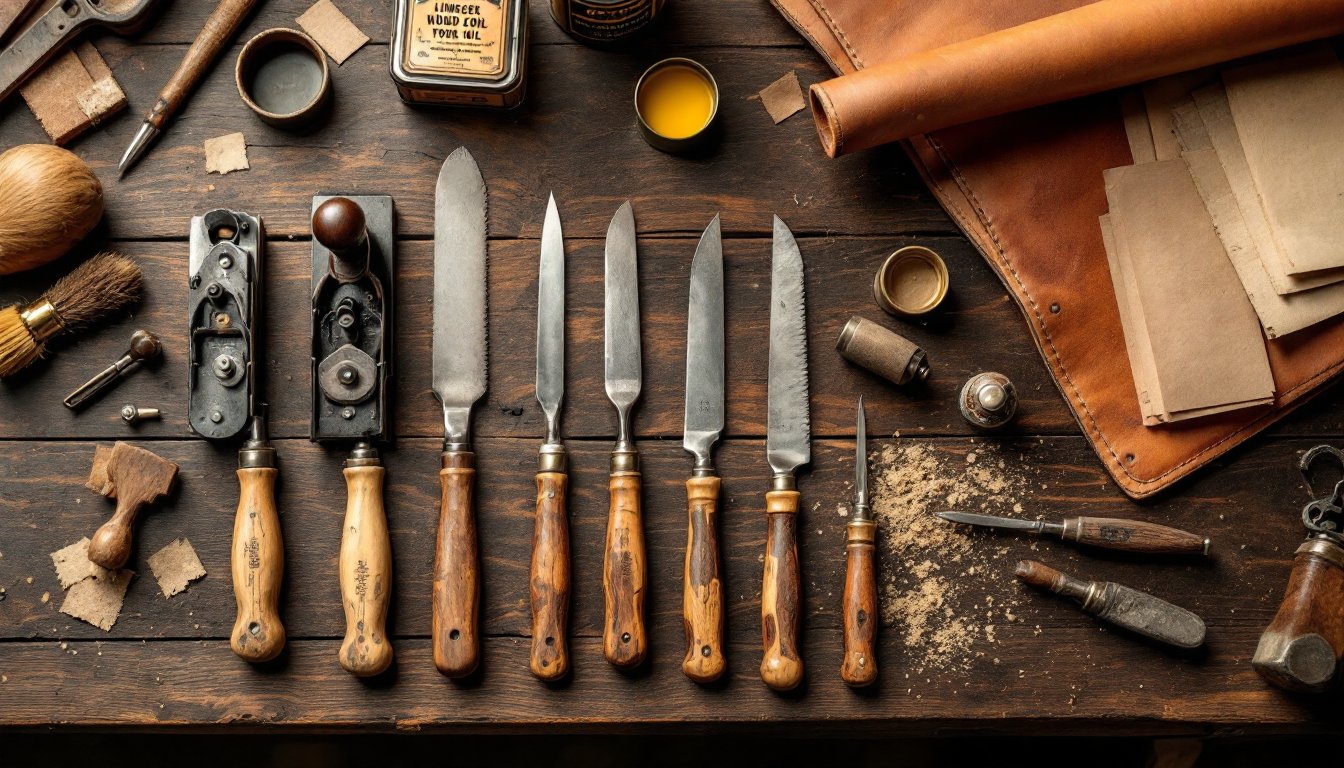
Hand planes are the anchor of any vintage woodworking collection. A No. 4 or No. 5 jointer plane is versatile for smoothing and straightening edges: a No. 6 or 7 is for longer stock and heavy material removal. Bench planes from manufacturers like Stanley, Record, and Millers Falls are abundant and affordable if they’ve been properly tuned. Specialty planes, shoulder planes, rabbet planes, and miter planes, allow joinery work that would otherwise require routers or table saws.
Saws deserve equal attention. Rip saws (with larger, angled teeth) cut along the grain: crosscut saws (with finer, upright teeth) cut across it. A quality vintage handsaw costing $20–40 second-hand often has better tooth geometry and plate tension than new imports at the same price. Japanese pull saws, which cut on the pull stroke rather than the push, are efficient and quieter than western designs. Start with one good rip saw or general-purpose saw before specializing.
Chisels, Gouges, and Carving Tools
Bench chisels (¼”, ½”, ¾”, 1″) handle mortising, paring, and general cleanup. Vintage chisels from Marples, Sorby, or Greenlee are prized because the steel holds an edge longer and accepts a finer honing than softer modern versions. Gouges, curved chisels used for fluting, detail carving, and roundover work, come in multiple sweeps (curvatures) and widths: collecting even a small set opens creative options.
Carving tools (spoons, fishtails, V-tools, skew gouges) were mass-produced in the 20th century and remain affordable. A beginner doesn’t need dozens: three to five basic shapes in quality vintage steel are enough to explore relief carving, spoon carving, or chip carving. Look for tools with intact handles and minimal pitting on the working end.
How to Identify Quality and Authenticity
The first quality signal is weight and balance. A vintage woodworking tool should feel substantial in hand, not plasticky or hollow. Run a magnet over the tool: ferrous metal (iron or steel) will attract it, a quick authenticity check for old tools versus recent reproductions.
Steel markings and maker stamps are crucial. Pitting or rust on a tool isn’t a dealbreaker: pitting on the working surface (blade, sole, tooth) is a red flag. Light surface rust cleans off: deep pitting cannot be fully removed without losing geometry. Makers like Stanley, Marples, Sorby, and Greenlee typically stamped their names clearly. Cross-reference unknown marks online, many vintage woodworking tool databases catalog makers and production years.
Handle condition matters for usability but is easy to repair. Loose handles, splits, or missing pieces are cosmetic issues: a new handle or handle repair costs $10–20 in materials. A tool with a chipped sole, bent body, or irreparable blade damage is less recoverable. For planes, check that the sole is flat by placing it on a known-flat surface (like a machinist’s straightedge at a hardware store) and looking for daylight gaps.
Price reasonableness varies by region and platform. A vintage hand plane in good condition shouldn’t cost more than $30–60 used: chisels $5–15 each: saws $15–40. Outliers in pricing often signal either exceptional rarity or inflated online seller estimates. Antique hand tools are common enough that patience pays off.
Restoration and Maintenance Basics
Restoring vintage woodworking tools doesn’t require specialized shop equipment. Start with surface cleaning: soak rusted tools in white vinegar for 24–48 hours to loosen rust, then scrub with a brass brush or steel wool. For stubborn rust, a wire wheel on a drill (wearing eye protection and a dust mask) speeds the process. Wipe clean and dry thoroughly to prevent new rust forming.
For blade sharpening, a vintage tool is only as good as its edge. Most bench planes and chisels need honing on an oilstone or waterstone. If the blade is badly damaged, chipped, or too thin to safely sharpen, professional regrinding at a tool service ($15–30) is worth the cost. Avoid power angle grinders if the blade shows signs of heat damage: they can ruin temper. Japanese waterstones are gentler and faster than oil stones but require flattening periodically.
Handle restoration is straightforward. Loose heads tighten with a wooden shim under the handle or a small screw. Handles with minor dents or dings can be lightly sanded and oiled with boiled linseed oil. Severely cracked or split handles are better replaced: new ash or hardwood blanks cost $5–10 from specialty tool vendors. Sand painted or varnished handles with 120-grit sandpaper, then seal with tung oil or beeswax paste to prevent moisture absorption.
Maintenance going forward is simple: wipe tools dry after use, store in a dry space, and lightly oil metal surfaces once a month with a thin coat of 3-in-1 oil or light machine oil. A thin coat prevents rust without making the tool slippery. Wooden handles benefit from an annual rub of boiled linseed oil.
Where to Source Vintage Woodworking Tools
Estate sales and auctions are treasure troves. A single estate might contain dozens of tools from a deceased carpenter or hobbyist. Arrive early to inspect condition and estimate fair market value before bidding. Local classifieds, garage sales, and word-of-mouth from friends often unearth deals because sellers don’t know what they have.
Flea markets and antique shops let you inspect tools in person before buying. Haggling is expected: an honest seller will acknowledge flaws. Building relationships with regular vendors pays off, they’ll set aside finds matching your collection interests.
Online marketplaces (eBay, Etsy, Facebook Marketplace, Craigslist) offer scale but require careful vetting. Request clear photos of the working surfaces, any damage, and maker stamps. Ask questions about rust severity, blade sharpness, and handle condition. Seller ratings matter: tools shipped from across the country may arrive with shipping damage, so compare total cost (tool + shipping) before committing.
Tool-specific forums and collector groups (like the Hand Plane or Chisel forums) connect buyers directly to sellers and offer peer advice. Communities often warn about common counterfeits or overpriced items circulating. Participating builds knowledge faster than solo hunting.
Start small. A single good handplane, two or three chisels, and one saw are enough to complete meaningful woodworking projects. Build the collection gradually as skills and interests develop.