Installing vinyl plank flooring can feel daunting, but the right vinyl flooring installation tools make the job straightforward and even enjoyable. Whether you’re tackling luxury vinyl plank (LVP), sheet vinyl, or rigid core products, having the correct equipment means cleaner cuts, better adhesion, faster work, and fewer frustrations. This guide covers the essential tools every DIYer needs, from measuring and cutting to applying adhesive and pressing the material down. You don’t need a contractor’s arsenal, but these carefully selected items will save time, prevent costly mistakes, and deliver professional-looking results that last.
Table of Contents
ToggleKey Takeaways
- Vinyl flooring installation tools include measuring devices, cutting implements, adhesive spreaders, and rollers—essential for clean cuts, proper adhesion, and professional results.
- A 25-foot tape measure, chalk line, straightedge, and quality utility knife with fresh blades form the foundation of any vinyl installation project.
- Notched trowels must match manufacturer specifications for your vinyl product, typically 1/4 inch × 3/8 inch for LVP, to ensure even adhesive coverage without waste or bond failure.
- A 36-inch linoleum roller is the workhorse tool for pressing vinyl flat, collapsing air pockets, and locking seams—rent one for $20–30 per day rather than buying for one-off jobs.
- Personal protective equipment, proper ventilation for 24–48 hours, and safety gear like gloves and eye protection prevent injury and health issues during installation.
- Allow adhesive and caulk to cure fully (24+ hours) before moving furniture or wet mopping to ensure a durable floor that lasts.
Cutting and Measuring Tools
Getting dimensions right is half the battle with vinyl flooring installation. Accurate measurements prevent waste, minimize visible seams, and ensure pieces fit snugly against walls and around obstacles.
Tape Measures, Straightedges, and Layout Guides
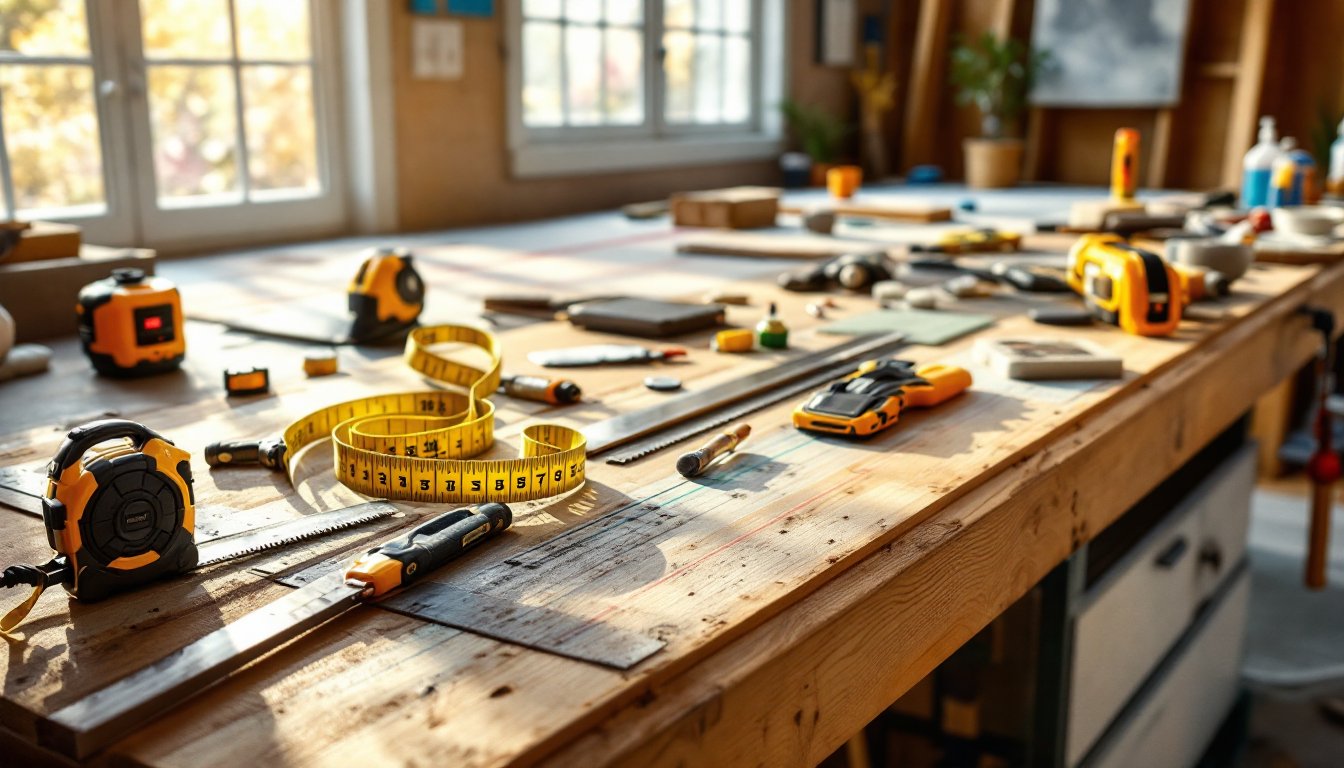
Start with a 25-foot tape measure with a standout of at least 10 feet: this prevents the blade from collapsing mid-measurement across a room. A 6-foot straightedge or aluminum level serves double duty, use it to check floor flatness (vinyl flooring requires the subfloor to be within 3/16 inch over 10 feet per manufacturers’ specs) and to guide layout lines with chalk or pencil.
For layout work, a chalk line costs under $15 and marks straight reference lines across the floor faster than a pencil. Snap lines parallel to the longest wall to establish your starting row, especially for planks you want visually centered. A speed square or combination square helps mark angles at corners and around doorframes. When measuring around obstacles like toilet flanges or door casings, transfer dimensions with a profile gauge (a plastic tool with movable needles that copies irregular shapes), this beats guessing and produces tight, professional cuts.
For plank layout, consider a laser level if your floor slopes or if you’re doing a large area: it projects a level line across the room in seconds, which is priceless for spotting high and low points. A carpenter’s pencil marks cleanly on vinyl and wipes away: ballpoint pens can smudge.
Most DIYers use a hand-operated vinyl cutter or utility knife for straight cuts along walls and seams. A quality utility knife with fresh blades cuts vinyl cleanly without splintering. For thicker luxury vinyl or rigid core planks, swap to a fine-tooth handsaw or Japanese pull saw, which gives you better control and produces a smoother edge than a dull blade. Keep spare blades on hand, dull tools lead to rough edges and wasted pieces.
Adhesive Application Tools
Not all vinyl flooring is floating: sheet vinyl and some luxury vinyl planks require adhesive to bond to the subfloor. The right spreading tool ensures even coverage, proper trowel ridges, and strong, bubble-free adhesion.
Notched Trowels and Spreaders
The notched trowel is non-negotiable for adhesive application. Trowel size and notch pattern depend on your vinyl product and subfloor, check the manufacturer’s installation guide, as it specifies the required trowel size (e.g., 1/4 inch × 3/8 inch or 1/2 inch × 1/2 inch notches). Too small, and you don’t apply enough adhesive: too large, and you waste material and risk telegraphing ridges through the flooring. Notches create consistent ridges that collapse under the weight of the vinyl, filling voids and curing into a solid bond.
Hold the trowel at a 45-degree angle to the subfloor, using firm, even pressure to scrape the adhesive into parallel ridges. Don’t overwork the area, once you’ve combed it, move on. Some adhesives set quickly (15–30 minutes), so work in manageable sections, typically 50–100 square feet, depending on your experience and the product’s open time.
For tight spaces, doorways, or edges, a plastic or metal spreader or putty knife helps work adhesive into corners and along walls. Some installers use a grout float (usually plastic, around $8–12) to spread adhesive in corners and around obstacles before laying the main field.
If applying sheet vinyl, a 1/2-inch notch J-trowel is standard. For luxury vinyl plank (LVP) over a prepared subfloor, verify the trowel size with your adhesive data sheet, most modern LVP adhesives work with a 1/4 inch × 3/8 inch U-notch trowel. Keep the trowel clean between applications: dried adhesive buildup changes the ridge pattern and weakens the bond. Wipe it on a damp rag or scraper as you work.
Installation and Pressing Tools
Once vinyl is laid, you need to press it flat, remove air, and ensure edges and seams bond firmly. Improper pressing leads to bubbles, loose seams, and a floor that fails prematurely.
Rollers, Mallets, and Kneeling Equipment
A 36-inch linoleum roller (or floor roller) is the workhorse of vinyl installation. This wide, heavy roller presses the vinyl against the adhesive, collapses air pockets, and locks seams. Rent one from a home center if you don’t own it: a new one costs $60–150, but rental is typically $20–30 per day. Roll in one direction first, then perpendicular, to ensure complete contact. Roll overlapped seams twice to guarantee a tight bond.
For areas the roller can’t reach, around door frames, under cabinets, or tight corners, use a hand roller (also called a J-roller) or hand seam roller. These palm-sized tools weigh 2–3 pounds and roll flat edges and seams with concentrated pressure. Many DIYers apply pressure using their knee, but a hand roller gives you control and prevents accidental slips.
If you’re working with rigid vinyl core or thicker LVP, a rubber mallet helps seams and edges sit flush without damaging the plank. Tap gently along the seam, working from the center outward, to avoid buckling. Never strike hard, the goal is persuasion, not force. Some installers use a tapping block (a wooden or plastic block placed over the plank) to distribute mallet strikes evenly and avoid denting the flooring.
For comfort during long installation days, kneeling pads or knee cushions reduce strain on joints. You’ll spend time on your knees measuring, fitting pieces, and rolling seams: a 1-2 inch foam pad or commercial kneeling board is worth $15–30 and saves your knees from hours of concrete or hard subfloor contact.
When sealing seams in sheet vinyl or at transitions, a caulk gun loaded with vinyl-specific caulk (not silicone: it doesn’t bond properly to vinyl) prevents moisture from creeping under the flooring. Silicone caulks are for trim and baseboards, not for sealing the flooring itself. Apply caulk in a thin, continuous bead, tool it smooth with a wet finger, and let it cure per the caulk manufacturer’s timeline before walking on it.
Safety and Finishing Gear
Vinyl installation involves adhesives, dust, cutting, and repetitive motion. Protect yourself and follow best practices to avoid injury and health issues.
PPE and Ventilation:
Wear nitrile gloves when handling adhesive, most modern adhesives are water-based or low-VOC, but prolonged skin contact irritates. Use safety glasses whenever cutting: vinyl chips and small shards fly unexpectedly. If cutting large volumes or using a power saw indoors, a dust mask or respirator (N95 minimum, or P100 for solvent-heavy work) prevents inhalation of vinyl dust and adhesive vapors. Vinyl flooring installation adhesives emit VOCs: ensure the space is well-ventilated during and after application. Open windows, run fans, and allow 24–48 hours of ventilation before moving furniture back in.
Hearing and Hand Protection:
If using a power miter saw or circular saw for cutting, ear protection (earplugs or earmuffs) prevents hearing damage from sustained noise. Work gloves protect hands from sharp vinyl edges and abrasive subfloors. A first aid kit with bandages, antibiotic ointment, and pain relief should be on hand, cuts and minor scrapes are common.
Finishing Tools:
Once the floor is installed and adhesive is cured (typically 24 hours), trim excess vinyl at walls using a utility knife and a metal straightedge. Hold the blade at a shallow angle to avoid gouging the finished surface. For transitions between rooms or where vinyl meets other flooring, install transition strips or T-molding, which you secure with finish nails or adhesive tabs (depending on the molding type). A nail gun or hammer and nail set speeds this process and ensures nails sit flush.
For final cleanup, a vacuum with a hard-floor setting (or a broom and dustpan) removes dust and debris. Avoid wet mopping for at least one week after installation to allow adhesive and caulk to cure fully. After curing, mild soap and water keep vinyl looking fresh, no special cleaners needed.
<h2 id="” data-id=””>Getting Started With Confidence
Installing vinyl flooring doesn’t require a full contractor’s toolkit, but these core tools, measuring devices, cutting implements, adhesive spreaders, rollers, and safety gear, separate frustrating DIY attempts from successful, lasting results. Start with the basics: tape measure, straightedge, utility knife, notched trowel, floor roller, and safety equipment. As you gain experience or tackle larger projects, add hand rollers, mallets, and specialty tools. Rent expensive equipment like floor rollers rather than buying them for one-off jobs. Budget time for prep and underlayment, follow manufacturer specs precisely, and don’t rush the adhesive cure time. Your finished floor will reward the effort.